Article URL: https://everydaywerk.com/books-for-taking-action/
Some links in this article may be affiliate links, which means Everyday Werk may earn a commission if you make a purchase through them, at no additional cost to you. We only recommend products and services we believe are worth considering.
As an Amazon Associate I earn from qualifying purchases.
Sometimes you don't need another vision board.
You don't need another podcast.
You don't need another webinar, another notebook, another saved Instagram post or another six months researching how everybody else did it.
And you definitely don't need 47 browser tabs open.
Sometimes you already know.
You know you want to apply.
You know you want to start the business.
You know you want to build the app.
You know you want to take the trip.
You know you want to write the book.
You know you need to have the conversation.
You know you want to learn the thing, leave the thing, launch the thing—or finally give yourself permission to try the thing.
You just haven't moved yet.
And there can be perfectly legitimate reasons for that.
Money.
Timing.
Responsibilities.
Fear.
Uncertainty.
Sometimes waiting really is the smart decision.
But sometimes?
We've dressed hesitation up as preparation.
We keep researching because research feels productive.
We keep planning because planning doesn't expose us to rejection.
We keep perfecting because nothing can fail while it's still safely sitting in our heads.
And we can get very good at preparing for a life we're not actually living.
Eventually, though, there comes a moment when the next piece of information isn't going to change anything.
You have to make a move.
Not necessarily the move.
A move.
Send the email.
Make the call.
Submit the application.
Buy the domain.
Take the class.
Ask the question.
Walk through the door.
These seven books are for that moment.
Not because reading one more book is the move.
But because sometimes the right idea can help you recognize what's been keeping you still—and give you the push to do something about it.
You don't have to have the entire plan.
You just have to stop confusing thinking about the move with making it.
Table of Contents

When you're saying: I'll do it in a minute.
The idea behind The 5 Second Rule is almost ridiculously simple.
You have an instinct to act.
And before your brain has enough time to produce its very persuasive list of reasons why you should wait, you count backward:
5-4-3-2-1.
And move.
That's it.
No elaborate morning routine. No 37-step productivity system.
The point isn't that counting backward magically solves your problem. It's that the countdown creates an interruption between the impulse to act and the hesitation that often follows.
And sometimes that tiny interruption is enough to get you moving before you've had time to talk yourself out of it.
Why We Like It
Because overthinking doesn't always look like overthinking.
Sometimes it looks incredibly responsible.
I'm going to research it a little more.
I should probably wait until Monday.
I need to get a few things organized first.
Let me think about it.
I'll start when things calm down.
And suddenly something you wanted to do has been sitting on your list for three years.
There's something refreshing about a tool whose entire purpose is to shorten the distance between:
I should...
and
I did.
That's especially useful when you're doing something new.
When you're already good at something, action can feel comfortable because you know what you're doing.
When you're reinventing, building, experimenting or beginning again?
Suddenly there are a thousand opportunities to hesitate.
The goal isn't to eliminate the nerves.
It's to stop requiring the nerves to disappear before you act.
Read This If...
You already know what the next small step is.
You're just not taking it.
Maybe you don't need another strategy.
Maybe you need to stop negotiating with yourself and move.
Make It WERK
Pick one thing you've been putting off that takes less than five minutes. When you finish this article, don't put it back on your list.
5-4-3-2-1. Do it.

When you're saying: That's just not something I do.
Before Shonda Rhimes wrote Year of Yes, she had already created some of television's biggest shows.
Successful?
Obviously.
Comfortable saying yes to everything that came with that success?
Not exactly.
Rhimes has described how a challenge from her sister led her to spend a year saying yes to things that frightened her, challenged her or pushed her outside the life she'd gotten comfortable living.
And that's what makes this book so interesting here.
It isn't about becoming successful.
She already was.
It's about recognizing that you can build a life that works—and still discover you've made parts of it smaller than they need to be.
Why We Like It
Because sometimes no becomes automatic.
No, I don't speak in front of people.
No, I wouldn't go by myself.
No, I'm not good at that.
No, I don't know how to do that.
No, that's not really me.
And to be clear: no can be a very good word.
Boundaries matter.
Protecting your time matters.
Knowing what you don't want matters.
One of the benefits of experience is that you don't have to say yes to everything just because somebody asked.
But there's another kind of no.
The one that arrives before you've even allowed yourself to consider whether you might actually want to say yes.
Sometimes we aren't protecting a boundary.
We're protecting a version of ourselves we've gotten comfortable being.
I'm not someone who travels alone.
I'm not an entrepreneur.
I'm not technical.
I'm not creative.
I'm not someone who gets on camera.
I'm not the kind of person who would change careers now.
Those sentences can sound like self-knowledge.
Sometimes they are.
But sometimes they're simply old information.
And after enough years, automatic no's can quietly define the size of our lives.
Read This If...
You've gotten very comfortable inside the boundaries of the person you've always been.
Maybe you're not afraid of the opportunity itself.
Maybe you're afraid of what saying yes to it might require you to discover about yourself.
You don't need to say yes to everything.
But there may be one thing you've been dismissing so quickly that you've never really asked yourself:
What if I said yes?
Maybe it's time to find out.
WERK Note
Before you automatically say that's not me, try adding one word:
Yet.
That's not me—yet.
Then see whether the sentence still feels true.

When you're saying: But what are they going to think?
Sometimes you've made the decision.
You're ready to apply.
Start the business.
Take the trip.
Change careers.
Move.
Date again.
Say no.
Say yes.
Do something that makes perfect sense to you.
And then you make one mistake:
You start imagining everybody else's reaction.
What will they think?
Will they understand?
Will they approve?
Will they think I'm being irresponsible?
Selfish?
Too ambitious?
Not ambitious enough?
Too old?
Trying too hard?
And suddenly a decision that felt clear when it belonged to you becomes complicated once you've handed it to an imaginary committee for review.
That's where The Let Them Theory comes in.
The central idea is straightforward: instead of spending enormous amounts of energy trying to control what other people think, say or do, let them—and redirect your attention toward what you can control.
Why We Like It
Because change can make other people uncomfortable.
Especially when they've gotten used to a particular version of you.
The dependable one.
The corporate one.
The available one.
The one who always says yes.
The one who doesn't rock the boat.
The one who makes the sensible choice.
The one everybody can count on to keep doing what she's always done.
And when you start behaving differently, not everybody is going to understand.
Here's the uncomfortable part:
They don't necessarily have to.
That doesn't mean we stop caring about people.
It doesn't mean we ignore wise counsel.
And it certainly doesn't mean our decisions don't affect others.
Sometimes the people who love us can see risks we're too excited—or too close—to see.
Listen.
Consider.
Be responsible.
But another person's discomfort doesn't automatically get veto power over your life.
There's a difference between considering someone's opinion and requiring their permission.
And sometimes making the move means learning that difference.
Read This If...
You know what you want to do—but you've been rehearsing everybody else's reaction before you've even tried it.
Maybe you're spending more time preparing to defend your decision than actually making it.
Let them have an opinion.
Let them misunderstand.
Let them need time to adjust.
You still get to have a life.
WERK Note
Think about one move you've been hesitating to make. Now ask yourself:
If nobody else had an opinion about this, what would I choose?
Your answer doesn't automatically mean you should do it. But it's worth knowing what your answer is before everybody else's gets added to the conversation.
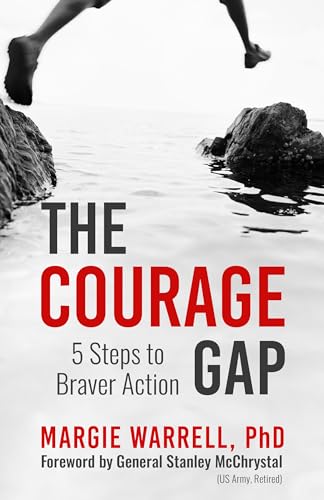
When you're saying: I know what I need to do. So why am I still not doing it?
Knowing isn't always the problem.
Sometimes you know exactly what you need to do.
Apply.
Ask.
Leave.
Start.
Speak up.
Put your name on it.
Let somebody see your work.
And yet there's this frustrating space between knowing what you want to do and actually doing it.
That's the space The Courage Gap explores.
Margie Warrell looks at the fears, self-doubt and uncertainty that can keep us from acting even when the direction itself feels relatively clear.
And we like the premise because it challenges an assumption a lot of us carry:
I'll do it when I feel more confident.
But what if we've gotten the order wrong?
What if confidence isn't always what gets you to act?
What if acting is sometimes how you build confidence?
Why We Like It
Because fear can be incredibly persuasive.
It doesn't always show up screaming:
DON'T DO IT.
Sometimes it sounds much more reasonable.
Maybe I should wait.
I'm not sure I have enough experience.
What if I embarrass myself?
There are probably people much more qualified.
I should get a little better at this first.
What if it doesn't work?
And suddenly fear has a clipboard and sounds like a risk-management department.
But fear isn't always a stop sign.
Sometimes it's simply information:
This matters to me.
Of course you're nervous before an interview for a job you really want.
Of course launching something you've created feels vulnerable.
Of course changing direction after decades in one career can be frightening.
Of course putting your name on something new can make your stomach flip.
You aren't necessarily doing something wrong.
You might simply be doing something new.
And there's an important difference.
Read This If...
You've been waiting to feel confident enough, qualified enough or certain enough before you make the move.
Maybe the question isn't:
How do I get rid of the fear?
Maybe it's:
What would I do next if I stopped requiring fear to leave first?
Because courage isn't the absence of uncertainty.
Sometimes courage is deciding uncertainty doesn't get the final vote.
Make It WERK
Write down one thing you would do if you knew you couldn't embarrass yourself.
Now look at your answer.
You still might fail.
Someone still might say no.
You still might discover you're not very good at it—yet.
But embarrassment?
You can survive that.
What would you try if you stopped treating that possibility like a catastrophe?

When you're saying: Who am I to create that?
This one is for the idea you've been keeping in the notes app.
The book.
The business.
The app.
The podcast.
The painting.
The website.
The recipe.
The project.
The thing you keep thinking about making but haven't because you're not sure you're qualified—or whether anyone will care.
Big Magic is Elizabeth Gilbert's exploration of creativity, curiosity and the fears that often accompany making something.
And it belongs here because not every next move needs to be strategic.
Some things deserve to exist simply because you feel compelled to create them.
Why We Like It
Because adulthood can train creativity right out of us.
Everything needs a business case.
A return.
A credential.
An audience.
A reason.
Before long, we're asking an idea to prove that it deserves to exist before we've even given ourselves permission to make it.
But sometimes curiosity is reason enough to begin.
Maybe the first version isn't profitable.
Maybe nobody sees it.
Maybe you're not particularly good at it yet.
Maybe it changes direction completely once you start.
That's okay.
Because here's the thing:
You don't always know what an idea can become while it's still sitting in your head.
You have to make something first.
And somewhere along the way, many of us started believing that being new at something was embarrassing.
It isn't.
Being new means you're learning.
Being inexperienced means you haven't done it yet.
And creating something that doesn't work isn't proof that you shouldn't have tried.
Sometimes it's how you discover what you actually want to make.
Read This If...
You've been waiting for someone to declare you officially qualified to create the thing you want to create.
Or you've convinced yourself that if you can't explain exactly where the idea is going, there's no point in starting.
Consider this your reminder:
Beginners are allowed to begin.
You don't have to turn every curiosity into a career.
You don't have to monetize every idea.
And you don't need an audience waiting before you're allowed to make something.
Sometimes you can create simply because something in you wants to know:
What would happen if I made this?
Make It WERK
Open the note.
You know the one.
Give yourself 20 minutes and make the smallest possible version of the idea.
Not the business.
Not the finished app.
Not the book.
The first thing you can actually see, read, test, touch or share.
Then decide what comes next.

When you're saying: I don't have enough time to start.
Maybe you don't.
Maybe your calendar really is full.
Work.
Family.
Caregiving.
Appointments.
Errands.
The things you have to do.
The things you promised you'd do.
And the things nobody technically asked you to do—but somehow you're still the person doing them.
Finding an open hour can feel almost laughable.
So the idea of finding enough time to start a business, learn something new, write the book, work on your health or finally tackle the project you've been thinking about?
Maybe next month.
Except next month has a funny way of arriving with its own calendar.
That's what makes Fran Hauser's Twenty Minutes Is the New Hour such a useful addition to this list.
Its premise pushes back against the idea that meaningful progress requires big, beautiful, uninterrupted blocks of time. Hauser examines the patterns that can consume our time and stall progress—including people-pleasing, procrastination, perfectionism and what she calls “padding”—and makes the case for smaller, more focused action.
Because sometimes the hour you're waiting for isn't coming.
But you might have 20 minutes.
Why We Like It
Because “I don't have time” can be completely true—and still not be the end of the conversation.
We don't need to romanticize being busy.
And we definitely don't need another productivity lecture telling women that every unused minute should become an opportunity to accomplish more.
Rest counts.
Doing absolutely nothing sometimes counts too.
But there's a difference between protecting your time and believing something isn't worth starting unless you can give it the perfect amount of time.
Sometimes perfectionism doesn't say:
It has to be perfect.
Sometimes it says:
I need more time.
An hour to exercise.
A whole afternoon to write.
A free weekend to work on the business.
A completely clear schedule to learn the software.
And because that ideal block never appears, neither does the first step.
Twenty minutes changes the question.
Instead of:
Do I have enough time to finish this?
Try:
What can I move forward in the time I actually have?
That's a very different question.
Read This If...
You keep postponing something because you can't find enough uninterrupted time to do it “properly.”
Maybe you don't need enough time to finish.
Maybe you need enough time to begin.
Twenty minutes won't build the whole business.
It won't write the whole book.
It won't transform your health.
But 20 focused minutes can create a page.
Research one question.
Take a walk.
Sketch one screen.
Send one email.
Learn one feature.
Make one decision.
And tomorrow?
You can make another one.
Make It WERK
Choose something you've been postponing because you “don't have time.”
Set a timer for 20 minutes.
Don't use the time to organize how you're eventually going to do it.
Do part of the actual thing.
When the timer ends, you can stop.
But now you've started.
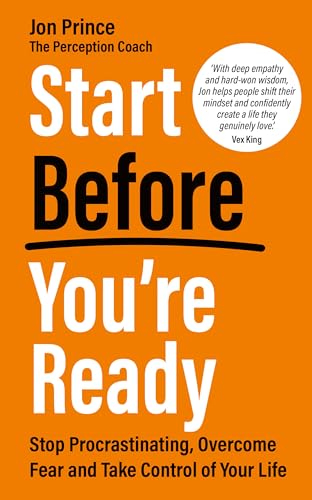
When you're saying: I'm almost ready. I just need a little more time.
That's a slightly dangerous sentence.
Because sometimes you really do need more time.
More information.
More money.
More preparation.
A better moment.
But sometimes “almost ready” becomes a permanent address.
One more course.
One more conversation.
One more revision.
One more month to think about it.
One more sign that this is definitely the right decision.
And eventually you have to confront an uncomfortable possibility:
What if ready isn't something that happens before you begin?
That's where Jon Prince's Start Before You're Ready comes in.
The book takes on the overthinking, perfectionism, self-doubt and uncertainty that can convince us we need to feel completely prepared before we move.
But so much of what we need to know can't actually be learned from the sidelines.
At some point, you have to enter the experience.
And then adjust.
Why We Like It
Because preparation is useful.
Research is useful.
Planning is useful.
Asking questions is useful.
Saving money can be necessary.
Learning the fundamentals before you jump can be very smart.
But there comes a point when preparation stops reducing risk and starts protecting you from having to find out what happens next.
And that line isn't always easy to recognize.
Especially when you're accomplished.
Because being a beginner again can be uncomfortable.
You may be used to knowing the answer.
Being the expert.
Walking into the room prepared.
Knowing how the system works.
Then you decide to do something new—and suddenly you don't know what you're doing.
That's not failure.
That's what beginning feels like.
You don't have to feel like an expert to take a beginner's step.
You don't need confidence in the entire journey to have enough courage for the next move.
And you don't need proof that something will work before you're allowed to try it.
Read This If...
You're 80 percent ready and have convinced yourself the missing 20 percent is the reason you can't begin.
Maybe there really is something important you still need to do first.
Do it.
But if the remaining 20 percent is mostly certainty?
You may be waiting for something that doesn't exist.
Maybe you don't need another month.
Maybe you need a first move.
WERK Note
Readiness isn't always something you find before you start.
Sometimes it's something you build because you started.
Now Make the Move
Maybe you've noticed something.
None of these books can actually make the move for you.
You can highlight every page.
Underline every sentence.
Buy the beautiful notebook.
Save the quote.
Listen to the audiobook twice.
And still be standing in exactly the same place.
Eventually, inspiration has to become behavior.
So before you close this tab, ask yourself:
What's one move I already know I need to make?
Not the whole plan.
Not the five-year strategy.
Not the thing that requires $50,000, six certifications and moving across the country.
The next move.
Maybe it's sending one email.
Making one appointment.
Opening one document.
Creating the account.
Calling the person.
Walking for 20 minutes.
Writing the first paragraph.
Submitting the application.
Buying the domain.
Sketching the first screen of the app.
Asking the question.
Whatever yours is, make it small enough that you can't hide behind needing a better plan.
And then?
Move.
Because there's something you can only learn on the other side of action.
Maybe it works.
Maybe it doesn't.
Maybe you discover you don't even want what you thought you wanted.
That's useful information too.
You adjust.
You learn.
You make another move.
That's how things begin.
Not always with confidence.
Not always with certainty.
And rarely with perfect timing.
Sometimes they begin with a woman deciding:
I've thought about this long enough.
5-4-3-2-1.
Make the move.
Keep Reading
Your Next Chapter Starts Here — 7 books to help you figure out what comes next.
The Magic in the Middle — 7 books that will make you think differently about midlife.