
Article URL: https://everydaywerk.com/books-for-your-next-chapter/
Some links in this article may be affiliate links, which means Everyday Werk may earn a commission if you make a purchase through them, at no additional cost to you. We only recommend products and services we believe are worth considering.
As an Amazon Associate I earn from qualifying purchases.
Sometimes the hardest part of starting a new chapter isn't taking the first step.
It's figuring out where you want to go.
There are seasons when the path that once made perfect sense suddenly doesn't. The career you worked hard to build may not fit anymore. The goals you've been chasing may not excite you the way they once did. Your responsibilities may have changed. You may have changed.
Or life may have made the decision for you.
A layoff. A breakup. An empty nest. A health wake-up call. A milestone birthday. A business idea you can't stop thinking about.
Sometimes change arrives with an invitation. Sometimes it kicks the door in.
Either way, eventually you're left with the same question:
What now?
You don't necessarily need to have the answer immediately.
Sometimes you need room to think. Sometimes you need to hear how someone else found her way. Sometimes you need an idea that makes you reconsider something you've believed about yourself for years.
And sometimes you simply need permission to imagine that the life you've already built doesn't have to determine the life you build next.
That's what this reading list is about.
These aren't seven books promising to hand you a five-step formula for reinventing your life. We've chosen books that approach the question from different directions—purpose, possibility, fear, identity, reinvention, success and self-trust.
You don't need to read all seven.
Start with the one that sounds like it was written for where you are right now.
WERK Note
You don't have to know exactly where you're going before you begin exploring what's possible. Clarity sometimes shows up because you started moving—not before.
Table of Contents

When you're asking: What am I actually supposed to be doing?
There are books you read because you want information. And then there are books you reach for because you're trying to hear yourself think.
The Path Made Clear is the latter.
Oprah Winfrey builds the book around one of life's biggest questions: What is my purpose?
But instead of presenting purpose as one giant calling that you're somehow supposed to discover, the book draws on conversations and insights from people across different fields to explore how direction can reveal itself over time.
Why We Like It
We like that this book makes room for uncertainty.
You don't have to arrive with a perfectly articulated five-year plan. You can be accomplished and still wonder what's next. You can have made good choices and decide that you want something different now.
And you can have more than one meaningful chapter in a lifetime.
That last part resonates with me personally.
I know what it's like to spend years becoming very good at something and still have a quiet sense that there might be something more. I built a successful career and learned a tremendous amount along the way. But even while I was doing well, I knew my career wasn't necessarily the entirety of what I was meant to do.
Sometimes it takes space—and sometimes a change you didn't necessarily plan—to finally ask yourself questions you haven't had the room to ask before.
What else could I do? What else could I build? What would I choose if I gave myself permission to think beyond the life I've already created?
That's part of what makes The Path Made Clear feel so relevant when you're standing between one chapter and the next. It doesn't require you to dismiss everything that came before. Instead, it invites you to consider that everything you've learned might actually be preparing you for what comes next.
Read This If...
You've reached a crossroads and keep asking yourself some version of:
What do I actually want now?
Not what should you want. Not what looks impressive. Not what makes the most sense to everyone else.
What feels meaningful to you?
This is a book for sitting with that question before rushing to answer it.

When you're asking: What if I actually went after the thing I keep thinking about?
The Alchemist is a novel, which makes it different from most of the books on this list. There are no exercises to complete, no ten-step framework and no checklist for reinventing your life.
Instead, there's a story.
A young shepherd named Santiago has a recurring dream that sends him on a journey in search of treasure. What follows is an adventure about risk, fear, intuition, setbacks, unexpected teachers— and what can happen when you decide to follow something you can't quite shake.
At its heart, The Alchemist asks a deceptively simple question:
What happens when you take seriously the thing that keeps calling you?
Why We Like It
Because sometimes practicality can become its own kind of trap.
We get very good at evaluating what makes sense.
Is it financially responsible? Is this the right time? Do I have enough experience? What will people think? What if it doesn't work? Shouldn't I be grateful for what I already have?
Those aren't unreasonable questions. In fact, they're often necessary ones.
But somewhere in all that sensible thinking, it's possible to stop asking another important question:
What do I want?
The Alchemist doesn't tell you to abandon common sense and chase every impulse. What it does beautifully is remind you to pay attention—to the ideas that keep returning, the curiosity that won't leave you alone, and the version of your life that you keep imagining even when you've tried to talk yourself out of it.
Sometimes the thing you can't stop thinking about deserves more than another thought.
Read This If...
There's something you've wanted to do for a long time, but you've gotten very good at explaining why now isn't the time.
Maybe it's a business. A book. A different career. A move. A degree. A trip you've talked about for years.
Or perhaps you can't even name it yet. You just know there's a part of yourself you haven't explored.
You don't have to interpret every coincidence as a sign from the universe to appreciate what this book is really asking:
Are you paying attention to your own life?
WERK Note
Not every dream needs to become a plan. But the ones that keep coming back may deserve an honest conversation.

When you're asking: Why do I keep getting in my own way?
Sometimes the obstacle isn't figuring out what you want.
It's allowing yourself to have it.
In The Big Leap, Gay Hendricks describes what he calls the Upper Limit Problem—his framework for understanding why we may become uncomfortable when life begins expanding beyond the level of success, happiness or possibility we've unconsciously decided we're allowed to have.
That discomfort can show up in surprisingly ordinary ways.
You procrastinate. You suddenly find ten reasons the opportunity isn't right. You create a problem just as something is going well. You talk yourself out of applying because you're missing one qualification. You decide you're too old, too late, too inexperienced—or somehow not quite the person who gets to do that.
Why We Like It
Because sometimes the next chapter isn't being blocked by a lack of opportunity.
Sometimes we're standing in front of an open door negotiating with ourselves about whether we're allowed to walk through it.
And that can be especially complicated when you've spent years building an identity around being responsible, dependable and successful in a particular lane.
You know how to be that version of yourself.
Becoming something else means being a beginner again.
It may mean doing something other people don't immediately understand. It may mean wanting more even though you already have things to be grateful for.
And it may require letting go of the idea that staying where you're competent is automatically safer than exploring where you could be exceptional.
Read This If...
You've noticed a pattern where you get close to something you want—and then somehow pull back.
Or if you've ever caught yourself saying:
Who am I to do that?
This book offers another question worth considering:
Who are you not to?

When you're asking: Okay—but how do I actually figure out what's next?
This is where our list gets more practical.
One of the most frustrating pieces of advice you can give someone at a crossroads is: “Just follow your passion.”
That's lovely when you know exactly what your passion is. What about when you don't?
Designing Your Life takes principles from design thinking—the approach designers use to solve complicated problems—and applies them to building a life.
Instead of assuming there's one perfect answer waiting for you to discover it, authors Bill Burnett and Dave Evans encourage experimentation: imagine multiple possibilities, test ideas, learn from what happens and adjust.
Why We Like It
Because you don't have to bet your entire life on your first idea.
That is incredibly freeing.
You can take a class before enrolling in a degree program. You can freelance before building a company. You can interview people doing work you're considering. You can volunteer. You can create something small.
You can test whether the life you've imagined actually feels the way you thought it would.
In other words, you can gather evidence.
This is particularly useful when you're making a change after years in an established career. You may be accustomed to operating in environments where you're experienced and know what you're doing. Reinvention can feel uncomfortable because suddenly you don't have all the answers.
But maybe you're not supposed to.
Read This If...
You keep waiting to become 100% certain before making a decision.
This book gives you permission to replace:
“Is this definitely the right thing?”
with:
“What's a small way I could find out?”
That is a very different way to approach a next chapter.
Make It WERK
Before you make the giant leap, run the little experiment. Information beats imagination when you're trying to decide whether an idea fits your real life.

When you're asking: Do I really have to start all over?
This may be one of the biggest fears hiding underneath the idea of reinvention.
You've spent years building experience.
You've learned how to solve problems. You've developed skills, relationships, instincts and judgment. You've figured out what you're good at—and probably discovered a few things you never want to do again.
So when you start imagining something different, it can feel unsettling to think: Do I really have to throw all of that away?
Pivot offers a much more useful way to think about change.
Jenny Blake's approach begins with what is already working—your existing strengths, interests and experience—and asks how you can use that foundation to move in a new direction.
In other words, a pivot isn't necessarily a complete restart.
It's a turn.
Why We Like It
Because reinvention can sound unnecessarily dramatic.
Burn it all down. Quit everything. Start over. Become a completely different person.
But most of us aren't starting with nothing.
We're starting with years—sometimes decades—of experience.
The challenge is learning how to separate what you want to leave behind from what is still valuable enough to bring with you.
Maybe the industry changes, but the skill doesn't. Maybe the title disappears, but the leadership experience stays. Maybe you stop doing the work you've always done and discover that the relationships, judgment, confidence or expertise you built while doing it become an advantage somewhere else.
A next chapter doesn't have to erase the previous one.
It can build on it.
Read This If...
You're ready for something different, but the idea of “starting over” makes you hesitate.
Instead of asking:
How do I begin again from zero?
try asking:
What have I already built that can help me make my next move?
That's a very different starting point.
WERK Note
Reinvention doesn't require you to discard your experience. Sometimes the smartest next move starts by recognizing just how much you're already bringing with you.
6. Second Act: How Successful Women Rewrite the Rules of Fulfillment and Power in Midlife

When you're asking: What if success doesn't mean what it used to mean to me?
There's a particular kind of crossroads that can be difficult to explain.
Nothing is necessarily wrong.
You've worked. You've achieved. You've handled responsibilities. You may have built a career and a life that, from the outside, look exactly like the things you once hoped to have.
And still...
Something has shifted.
That's the territory that makes Second Act particularly interesting for this list. It speaks to accomplished women reconsidering fulfillment, ambition and what they want the next stage of their lives to look like.
Why We Like It
Because changing your definition of success doesn't erase your previous accomplishments.
Maybe there was a time when success meant the title. Or the salary. Or proving you could make it in the room.
Maybe now it means owning more of your time. Building something that belongs to you. Working differently. Having enough. Being present. Creating impact without sacrificing everything else to do it.
There's tremendous freedom in realizing that you are allowed to update the definition.
The version of success you chose at 30 doesn't have to be the version you pursue at 50—or 60.
Read This If...
You've accomplished some of the things you once wanted and found yourself wondering:
Why doesn't this feel like enough anymore?
That doesn't necessarily mean you're ungrateful.
It may simply mean you've grown.
And perhaps the next question isn't: How do I become more successful?
It's: What does success mean to me now?
When you're asking: What if I already know more than I think I do?
You've researched. You've made the pros-and-cons lists. You've asked people you trust.
You've listened to the podcasts, bookmarked the articles, watched the videos and probably opened more browser tabs than any reasonable person needs.
And still, there comes a point when nobody else can answer the question for you.
You have to choose.
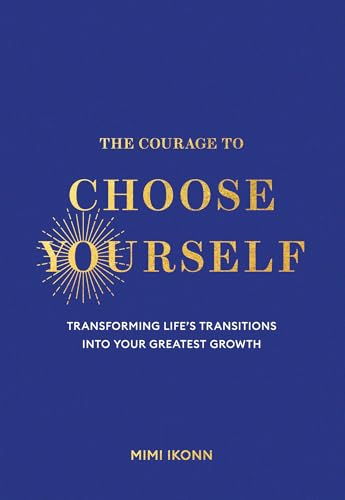
Published in 2026, The Courage to Choose Yourself explores self-trust, life transitions and the relationship we have with our own judgment. Mimi Ikonn approaches transformation through learning to listen more closely to what fits, what doesn't and what we value most.
Why We Like It
Because this feels like the right place to end our list.
We started with The Path Made Clear asking: What do I want?
We've considered dreams, self-imposed limits, experimentation, reinvention and changing definitions of success.
Eventually, though, you have to bring all of that information back to yourself.
And that's not always easy.
After decades of being rewarded for being responsible, reasonable, successful, accommodating or dependable, it can become surprisingly difficult to distinguish between: What do I actually want? and What have I learned I'm supposed to want?
There are plenty of people willing to tell you what your next chapter should look like.
This book brings the conversation back to the person who ultimately has to live it.
You.
Read This If...
You have an idea of what you want next, but you keep looking for someone—or something—to tell you that you're making the right decision.
Maybe you've been waiting for permission. Maybe you've been waiting for certainty. Maybe you've been waiting to become a more confident version of yourself before making the choice.
But perhaps confidence isn't the prerequisite.
Perhaps some of it gets built after you choose yourself and discover that you can trust the woman making the decision.
And If You Still Don't Know What's Next...
That's okay.
Really.
You don't need to finish this article, order seven books and emerge next Tuesday with a color-coded reinvention plan.
Sometimes figuring out what comes next starts much smaller.
Notice what you're curious about.
Pay attention to what gives you energy—and what consistently drains it.
Revisit something you stopped doing because life got busy.
Talk to someone living a version of a life that interests you.
Take the class.
Write down the idea.
Research the possibility.
Give yourself permission to imagine without immediately requiring yourself to execute.
Because your next chapter doesn't have to arrive fully written.
You get to write it.
And everything that came before?
Bring it with you.
The career. The mistakes. The wins. The relationships. The disappointments. The skills. The detours. The resilience. The things you learned the easy way and everything you had to learn the hard way.
None of it was wasted.
Your next chapter isn't starting from scratch. It's starting from experience.
And that might be one of the greatest advantages you have.
Keep Reading
The Magic in the Middle — 7 books that will make you think differently about midlife.
Make the Move — 7 books for when you're ready to stop thinking and start doing.